
01 / Thermography
Roofs: study the assembly and its heating history.
A roof screening assignment may look for differences in how areas warm and cool. Under suitable circumstances, moisture within insulation can influence thermal response after solar heating. The roof assembly, material, thickness, surface condition and weather determine whether that approach is suitable. Timing should follow the chosen method, rather than a fixed sunset appointment for every roof.
Repairs, debris, ponded water, ballast, coatings, shadows and construction changes can complicate a pattern. Begin with a visible overview and available roof information. Mark areas that warrant follow-up, then agree how the owner’s qualified roof professional will confirm their condition. Thermal imagery alone should not establish the quantity of wet insulation or prescribe replacement.
Sources: Infrared Training Center: Level I sUAS Thermography, ITC 107-RM [1.00], July 1, 2023 (private training reference) · Infrared Training Center / Gary Orlove: A 16-year Roof Moisture Study
02 / Thermography
Buildings: know what is driving the temperature difference.
An exterior wall is affected by indoor conditions, outdoor conditions, sunlight, wind and construction. For a building-envelope question, the reviewer needs to understand which of those influences should reveal the condition. The same wall may look different from another angle or at another time without any change in its underlying construction.
A thermal pattern can support a targeted investigation of a suspected heat-flow or air-leakage issue. It does not directly measure whole-building energy performance or prove concealed damage. Share drawings, symptoms and operation information where available. If a specialist needs an indoor view or another test, plan that work alongside the aerial record.
Sources: Infrared Training Center: Level I sUAS Thermography, ITC 107-RM [1.00], July 1, 2023 (private training reference) · Teledyne FLIR: What thermal imaging can and cannot see through
03 / Thermography
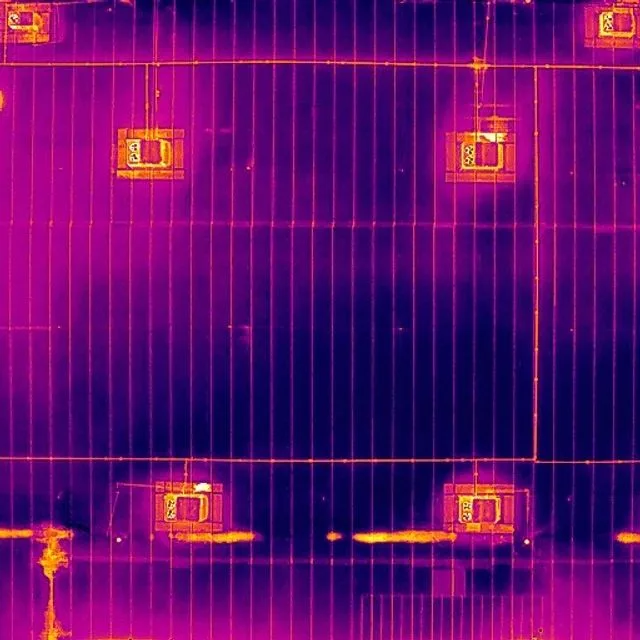
Solar: the operating state is part of the inspection.
A thermal survey of operating photovoltaic modules needs a method suited to the array, suitable sunlight and documented conditions. Shading, clouds, wind, soiling, reflections and changes in electrical operation can influence what appears. A roof moisture flight planned for a cooling period is not automatically the right collection method for solar performance screening.
Module or cell patterns may justify review by the solar team, but similar-looking patterns can have different causes. Associate each observation with the array layout, visible context and capture time. Qualified personnel should determine the electrical condition and corrective work, using appropriate testing. A thermal image by itself does not quantify lost energy or certify compliance with an inspection standard.
Sources: Infrared Training Center: Level I sUAS Thermography, ITC 107-RM [1.00], July 1, 2023 (private training reference) · Infrared Training Center: Aerial Solar Thermography and Condition Monitoring of Photovoltaic Systems
04 / Thermography
Equipment: compare like with like, under useful load.
Equipment behavior can depend on its load and operating cycle. Comparing an active component with an idle component may tell a different story from comparing equivalent components under similar conditions. Surface finish and viewing angle remain important, especially around reflective metal.
An aerial view can help document an accessible surface from a planned safe position. It does not authorize entry into electrical equipment, close flight around energized infrastructure or a diagnosis beyond the agreed scope. Coordinate with the asset owner and qualified reviewer before collecting the record, including which information about operation can be supplied safely.
Sources: Infrared Training Center: Level I sUAS Thermography, ITC 107-RM [1.00], July 1, 2023 (private training reference) · Teledyne FLIR: How emissivity affects thermal imaging
05 / Thermography
Search: plan for contrast, cover and confirmation.
An animal can be easier to distinguish when its surface signature contrasts with the thermal background. Sun-heated ground, rocks and other objects can also produce candidate detections. Darkness may help some observation conditions, but it does not create a view through a tree canopy, a building or terrain.
Plan the search area, access, communication and confirmation process with the person coordinating the task. Record obstructed areas separately from areas with useful visibility. A completed flight path does not prove that a subject was absent. See our dedicated search guide for detection limits and response coordination; emergencies belong with the responsible authority first.
Sources: Infrared Training Center: Level I sUAS Thermography, ITC 107-RM [1.00], July 1, 2023 (private training reference) · Teledyne FLIR: What thermal imaging can and cannot see through
06 / Thermography
When conditions change, change the plan.
A cloud bank, a wet surface, a change in asset operation or an unexpected obstruction can alter what the assignment can support. The professional response is to record the change and reassess. Options may include rescheduling, collecting visible context only or delivering a narrower observation with clear limits.
For repeat visits, preserve more than the route. Record the relevant conditions and operating state so a future reviewer can understand differences between dates. A reliable comparison is built from comparable evidence, not simply matching camera positions.
- Define the question and intended reviewer.
- Identify the mechanism expected to produce a useful pattern.
- Select an appropriate method and capture window.
- Record weather, surface and operating context.
- Agree the confirmation process and limits before flight.
Source: Infrared Training Center: Level I sUAS Thermography, ITC 107-RM [1.00], July 1, 2023 (private training reference)
VERIFY THE DETAILS / KEEP EXPLORING
Sources & further reading
Original explanation by Fly Maxwell. Technical and regulatory details are linked to the responsible organizations below. Product features, software plans and operating rules can change; check the current source when planning a project or a flight.
- Level I sUAS Thermography, ITC 107-RM [1.00], July 1, 2023Infrared Training Center · reviewed October 8, 2026
PDF pages 119–155. Owner-supplied course reference, reviewed privately. The copyrighted manual is not distributed on this website.
- A 16-year Roof Moisture Study Infrared Training Center / Gary Orlove · reviewed October 8, 2026
- What thermal imaging can and cannot see through Teledyne FLIR · reviewed October 8, 2026
- Aerial Solar Thermography and Condition Monitoring of Photovoltaic Systems Infrared Training Center · reviewed October 8, 2026
- How emissivity affects thermal imaging Teledyne FLIR · reviewed October 8, 2026
Manufacturer specifications describe the product under stated conditions. They are not a promise of project accuracy, flight duration, target detection or a particular outcome.