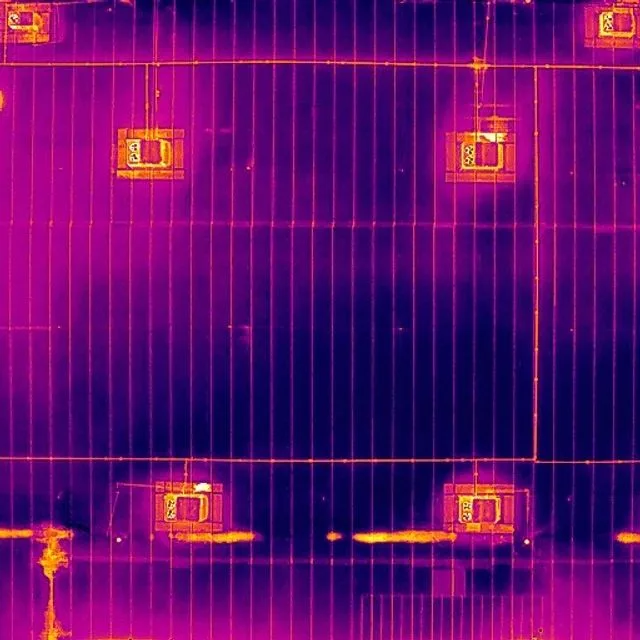
Thermography adds a view of surface temperature patterns. A useful assignment begins with the question, the asset or area, and the conditions needed to capture meaningful imagery.
Actual roof thermography from the Fly Maxwell collection.
BEFORE CHOOSING A FLIGHT WINDOW
Explain what you want to understand.
Start with the building, asset or search area and the reason for the request. A roof surface, a solar installation and an animal-search inquiry have different objectives and conditions.
Bradley is a Level I sUAS Applications Certified Thermographer. The project conversation connects that training with the capture question, the operating setting and the files needed for follow-up.
Explore the thermal learning room for heat-transfer fundamentals, camera measurement, application conditions and thermal-report examples.
Give the planning conversation more than a location and date.
The surface and its surroundings
Materials and viewing conditions influence a thermal image. Describe the roof, exterior or equipment and any relevant context your team already knows.
The timing and environment
Sunlight, weather, background temperatures and operating conditions can affect what appears. Share your available window so suitability can be discussed before scheduling.
The follow-up question
Tell us who will review the imagery and what they need from it. Visible-light context and organized delivery can help them understand where a thermal frame was captured.
YOUR PRINTABLE CHECKLIST
Prepare the essentials.
A focused brief helps determine whether thermal capture fits the task.
Use your browser’s Print command to print this guide or save it as a PDF. Checklist selections stay on this page and are not submitted to Fly Maxwell.
UNDERSTAND THE RESULT
A pattern is a starting point for review.
A hot or cool area alone does not establish a leak, cause, damage or the identity of a search target. The image needs context, suitable conditions and appropriate interpretation. Some questions require additional confirmation by a qualified professional.
Thermal cameras record infrared energy from visible surfaces. They do not see through roofs, walls or dense cover. Explain the goal early so the plan can account for those limits.
Building or asset imagery
Discuss scoped thermal collection, supporting visible-light photographs and organization around the relevant areas. Diagnostic or electrical conclusions belong with an appropriately qualified specialist.
Pet or livestock inquiries
Start with the species, last known area, time last seen, access and the person coordinating. Availability and suitability are confirmed individually.
A coordinated search
Missing-person and public-safety work must be discussed with the responsible agency. For immediate danger or a missing person, contact 911 or the responsible authority first.
When you review a finished thermal set, keep its location, capture context and any agreed notes together. A striking palette should not become a finding without supporting evidence.
PUT THE PLAN INTO MOTION
Start with the thermal question.
Tell us what you want to understand, where the task is and when the imagery is needed.